Unlock the full potential of the AWS Management Console with these essential insights. Whether you’re a beginner or a pro, this guide delivers practical strategies to streamline your cloud experience and boost productivity—fast.

What Is the AWS Management Console?

The AWS Management Console is the central web-based interface for managing Amazon Web Services (AWS) resources. It provides a visual, user-friendly environment where developers, administrators, and architects can configure, monitor, and manage their cloud infrastructure without needing deep command-line expertise. Accessible via any modern browser, the console simplifies complex cloud operations through intuitive navigation and real-time feedback.
Core Purpose and Functionality
At its heart, the AWS Management Console serves as a gateway to over 200 AWS services—from EC2 instances and S3 buckets to Lambda functions and RDS databases. It allows users to launch resources, set permissions, view billing data, and monitor performance—all from a single dashboard. This centralized control reduces the learning curve for new users while offering advanced filtering and search capabilities for experienced engineers.
- Provides access to all AWS services in one place
- Supports role-based access control (RBAC) for team collaboration
- Offers real-time monitoring and alerting tools
How It Compares to CLI and SDKs
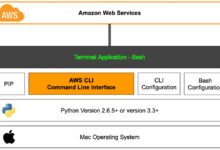
While the AWS Command Line Interface (CLI) and Software Development Kits (SDKs) offer automation and scripting advantages, the AWS Management Console excels in visualization and immediate feedback. For instance, troubleshooting a misconfigured security group is faster when you can visually trace inbound rules rather than parsing JSON output. However, for repeatable deployments, Infrastructure as Code (IaC) tools like AWS CloudFormation or Terraform are often preferred. The console remains ideal for exploration, debugging, and one-off tasks.
“The AWS Management Console is the cockpit of your cloud infrastructure—everything you need to see, control, and adjust is right in front of you.” — AWS Certified Solutions Architect
Key Features of the AWS Management Console
The AWS Management Console isn’t just a portal—it’s a powerful suite of integrated tools designed to enhance visibility, control, and efficiency. Its feature set has evolved significantly since its launch, now offering deep integration across services and enhanced user experience elements that make cloud management more intuitive than ever.
Unified Dashboard and Global Navigation
One of the most impactful features of the AWS Management Console is its unified dashboard. Upon login, users are greeted with a personalized homepage showing service health, cost trends, and recent activity. The global navigation bar at the top allows instant switching between regions, accounts (via AWS Organizations), and services. This cross-account and cross-region visibility is crucial for enterprises managing multi-environment deployments.
- Customizable home dashboard with widgets
- Quick-switch between AWS regions and accounts
- Service search bar with auto-suggestions
Integrated Monitoring with CloudWatch
Direct integration with Amazon CloudWatch means users can view metrics, set alarms, and analyze logs without leaving the AWS Management Console. For example, you can navigate to an EC2 instance, click the ‘Monitoring’ tab, and instantly see CPU utilization, network traffic, and disk I/O graphs. You can also create custom dashboards that aggregate data from multiple resources, providing a holistic view of system performance.
CloudWatch Alarms can be configured directly within the console, enabling proactive responses to issues like high latency or memory exhaustion. These alarms can trigger automated actions via AWS Auto Scaling or notify teams through Amazon SNS.
Security Hub and IAM Integration
Security is deeply embedded in the AWS Management Console through native integration with AWS Identity and Access Management (IAM) and AWS Security Hub. From the console, administrators can create and manage user roles, assign granular permissions, and audit access logs. Security Hub provides a comprehensive view of compliance status across frameworks like CIS, PCI DSS, and HIPAA.
For example, if a bucket is accidentally made public, Security Hub will flag it immediately within the console interface, allowing quick remediation. This real-time feedback loop enhances security posture without requiring external tools.
How to Access and Navigate the AWS Management Console
Getting started with the AWS Management Console is straightforward, but mastering navigation can significantly improve workflow efficiency. Whether you’re logging in for the first time or managing a complex multi-account setup, understanding the login process and layout is essential.
Step-by-Step Login Process
To access the AWS Management Console, visit https://aws.amazon.com/console/ and click ‘Sign In to the Console’. You’ll need either your root account email or an IAM user login. AWS strongly recommends using IAM users instead of the root account for daily operations to minimize security risks.
- Enter your AWS account ID or alias
- Input your IAM username and password
- Complete multi-factor authentication (MFA) if enabled
Once authenticated, you’ll land on the AWS Management Console homepage, ready to explore services.
Understanding the Console Layout
The console interface is divided into several key zones: the global navigation bar, the service menu, the main content area, and the footer. The global bar includes your account name, region selector, support center, and notification bell. The service menu (accessible via the ‘Services’ dropdown or hamburger icon) categorizes AWS offerings into groups like Compute, Storage, Networking, and Machine Learning.
The main content area changes dynamically based on the selected service, offering configuration panels, resource lists, and monitoring tabs. Familiarity with this layout reduces cognitive load and accelerates task completion.
Customizing Your Console Experience
AWS allows extensive personalization of the Management Console. Users can pin frequently used services to the top of the menu, rename the console view for clarity, and even change the color theme (light or dark mode). Additionally, the ‘Recent Services’ section automatically tracks your usage, making it easy to jump back into ongoing projects.
You can also create custom dashboards using AWS CloudWatch, which can be accessed directly from the console. These dashboards can display KPIs like API error rates, data transfer costs, or Lambda invocation counts—tailored to your operational needs.
Managing AWS Services Through the Console
The true power of the AWS Management Console lies in its ability to manage a vast array of cloud services with minimal friction. From launching virtual servers to configuring serverless applications, the console provides guided workflows and contextual help to ensure success.
Launching and Configuring EC2 Instances
Amazon Elastic Compute Cloud (EC2) is one of the most commonly used services in the AWS Management Console. To launch an instance, navigate to EC2 > Instances > Launch Instance. The console walks you through selecting an Amazon Machine Image (AMI), choosing an instance type, configuring storage, and setting up security groups.
- Select from pre-configured AMIs (e.g., Amazon Linux, Ubuntu, Windows Server)
- Choose instance types based on CPU, memory, and cost (e.g., t3.micro for dev, c5.xlarge for compute-heavy workloads)
- Attach EBS volumes and configure auto-scaling policies
After launch, the console displays the instance’s public IP, status checks, and monitoring graphs, enabling immediate troubleshooting.
Creating and Managing S3 Buckets
Amazon S3 (Simple Storage Service) is another cornerstone of AWS, and the AWS Management Console makes bucket creation simple. Navigate to S3 > Create Bucket, enter a globally unique name, select a region, and configure settings like versioning, encryption, and public access blocking.
Once created, you can upload files via drag-and-drop, set bucket policies for access control, and enable lifecycle rules to transition objects to cheaper storage classes (e.g., S3 Glacier). The console also displays storage metrics and access logs, helping you optimize costs and security.
“S3 is the backbone of AWS storage, and the Management Console makes it accessible to everyone—from developers to data analysts.” — AWS Storage Specialist
Setting Up Lambda Functions
AWS Lambda enables serverless computing, and the AWS Management Console provides a streamlined interface for creating and managing functions. Navigate to Lambda > Create Function, choose authoring options (e.g., blueprint, container image, or blank function), and configure triggers (e.g., API Gateway, S3 events, or CloudWatch Events).
You can write code directly in the inline editor, set environment variables, and define execution roles via IAM. The console also provides real-time logs through CloudWatch and performance metrics like duration and invocation count, making optimization straightforward.
Security and Access Control in the AWS Management Console
Security is not an afterthought in AWS—it’s built into every layer of the Management Console. From identity management to compliance monitoring, AWS provides robust tools to protect your cloud environment.
Using IAM for User and Role Management
AWS Identity and Access Management (IAM) is the foundation of security in the AWS Management Console. Through IAM, you can create users, groups, and roles with precise permissions. For example, you might create a ‘Developers’ group with read/write access to S3 and Lambda but no access to billing information.
- Create policies using JSON or visual policy builder
- Assign permissions at the user, group, or role level
- Enable MFA for enhanced account protection
IAM also supports federated access via SAML 2.0, allowing integration with corporate identity providers like Microsoft Active Directory.
Enabling Multi-Factor Authentication (MFA)
MFA is one of the most effective ways to secure AWS accounts. In the AWS Management Console, you can enable MFA for both root and IAM users under the IAM dashboard. Supported devices include virtual MFA apps (like Google Authenticator), U2F security keys, and hardware tokens.
Once enabled, users must provide a time-based code in addition to their password, drastically reducing the risk of unauthorized access—even if credentials are compromised.
Monitoring Security with AWS Security Hub
AWS Security Hub aggregates findings from multiple AWS services (like GuardDuty, Inspector, and Config) into a single dashboard within the Management Console. It provides a security score, highlights critical vulnerabilities, and offers remediation steps.
For example, if an S3 bucket is found to be publicly accessible, Security Hub will generate a finding with severity level, affected resource, and a link to fix it directly from the console. This centralized view simplifies compliance reporting and strengthens overall security posture.
Cost Management and Billing Insights via the Console
One of the most valuable aspects of the AWS Management Console is its ability to provide detailed cost visibility and budgeting tools. Without proper oversight, cloud spending can spiral out of control—making these features essential for any organization.
Using AWS Cost Explorer
AWS Cost Explorer is a powerful tool accessible directly from the Management Console that allows you to visualize, understand, and manage your AWS spending over time. You can generate reports by service, region, linked account, or tag, helping you identify cost drivers.
- View 12 months of historical data
- Create custom reports with filters and groupings
- Forecast future spending based on trends
For example, you might discover that EC2 costs spiked in the last quarter due to unattached EBS volumes—insights that lead directly to cost-saving actions.
Setting Up Budgets and Alerts
The AWS Management Console allows you to create custom budgets for cost, usage, or reservations. You can set thresholds (e.g., 80% of monthly budget) and receive alerts via email or SNS when limits are approached.
Budgets can be scoped to specific services, tags (e.g., ‘Project: Marketing’), or accounts in an organization. This granular control ensures financial accountability across teams and departments.
Analyzing Cost Allocation Tags
Cost allocation tags are metadata labels you apply to AWS resources (e.g., ‘Environment: Production’, ‘Team: Analytics’) that enable detailed cost tracking. These tags can be managed and reported on directly in the AWS Management Console.
For instance, a CFO can generate a monthly report showing how much each department spent on AWS, enabling accurate chargebacks and budget planning. Tags must be activated in the billing console before they appear in cost reports.
Best Practices for Efficient Use of the AWS Management Console
While the AWS Management Console is powerful, inefficient usage can lead to errors, security risks, and wasted time. Adopting best practices ensures you get the most value while minimizing risk.
Organize Resources with Tags and Naming Conventions
Consistent tagging and naming are critical for managing large-scale AWS environments. Use descriptive names (e.g., ‘web-server-prod-us-east-1’) and apply tags like ‘Owner’, ‘Project’, and ‘Environment’ to every resource.
- Enforce tagging policies using AWS Config rules
- Use tags for automation (e.g., backup scripts that target ‘Backup: Daily’ resources)
- Integrate tags with cost allocation and monitoring tools
This practice improves searchability, accountability, and automation.
Leverage Saved Filters and Recent Services
The AWS Management Console remembers your recent service usage and allows you to save custom filters. For example, if you frequently manage EC2 instances in us-west-2 with the tag ‘Environment=Staging’, save that filter for one-click access.
This reduces navigation time and minimizes the risk of making changes in the wrong environment—a common cause of outages.
Avoid Root Account Usage
Never use the AWS root account for daily operations. Instead, create IAM users with least-privilege permissions. The root account should only be used for a few critical tasks like changing account settings or enabling consolidated billing.
“If your root account credentials are compromised, the entire AWS environment is at risk. IAM users with MFA are the safest path forward.” — AWS Security Best Practices Guide
Advanced Tips and Hidden Features in the AWS Management Console
Beyond the basics, the AWS Management Console offers several advanced features that can dramatically improve productivity and control. These lesser-known tools are often overlooked but can make a significant difference in day-to-day operations.
Using the AWS Console Mobile App
AWS offers a mobile app that mirrors many console functions, allowing you to monitor resources, receive alerts, and even stop EC2 instances on the go. While not a full replacement for the desktop console, it’s invaluable for urgent actions during off-hours.
The app supports MFA, push notifications, and dark mode, ensuring a secure and usable experience. Download it from the AWS Console Mobile App page.
Enabling Console Access Logging with AWS CloudTrail
AWS CloudTrail logs all actions taken in the AWS Management Console, providing an audit trail for security and compliance. Every API call—whether made via the console, CLI, or SDK—is recorded with details like user identity, timestamp, and source IP.
You can view CloudTrail events directly in the console under ‘CloudTrail > Event history’, or stream logs to S3 for long-term retention and analysis with tools like Amazon Athena.
Customizing the Console with URL Hacks
Experienced users can manipulate console URLs to pre-filter views. For example, appending ?region=us-west-2 to an EC2 URL forces the console to load instances in that region. Similarly, you can deep-link to specific resources using ARNs in the URL path.
While not officially documented, these techniques are widely used by DevOps teams to create bookmarked dashboards for specific environments.
What is the AWS Management Console?
The AWS Management Console is a web-based interface that allows users to interact with Amazon Web Services. It provides a graphical way to manage AWS resources like EC2 instances, S3 buckets, and Lambda functions, making cloud infrastructure accessible without requiring command-line expertise.
How do I secure my AWS Management Console access?
To secure access, always use IAM users instead of the root account, enable multi-factor authentication (MFA), and apply the principle of least privilege. Additionally, monitor sign-in activity through AWS CloudTrail and set up alerts for unusual behavior.
Can I manage multiple AWS accounts from one console?
Yes, using AWS Organizations and AWS Single Sign-On (SSO), you can manage multiple AWS accounts from a single console interface. This is ideal for enterprises with separate development, staging, and production environments.
Is the AWS Management Console free to use?
Yes, the AWS Management Console itself is free. You only pay for the AWS resources you create and use through the console, such as EC2 instances, S3 storage, or Lambda executions.
How can I reduce costs using the AWS Management Console?
You can reduce costs by using AWS Cost Explorer to analyze spending, setting up budgets and alerts, enabling cost allocation tags, and identifying idle or underutilized resources like unattached EBS volumes or over-provisioned EC2 instances.
Mastering the AWS Management Console is a critical step in harnessing the full power of the cloud. From intuitive service management to robust security and cost controls, the console serves as the central hub for all AWS activities. By following best practices—like using IAM, enabling MFA, and leveraging monitoring tools—you can build a secure, efficient, and scalable cloud environment. Whether you’re deploying your first EC2 instance or managing a global infrastructure, the AWS Management Console provides the tools you need to succeed.
Recommended for you 👇
Further Reading: