Logging into AWS doesn’t have to be complicated. Whether you’re a beginner or a seasoned cloud engineer, mastering the AWS login process is your first step toward unlocking the full power of Amazon’s cloud ecosystem. Let’s dive into everything you need to know to log in securely and efficiently.

Understanding AWS Login: The Gateway to the Cloud

The AWS login is your entry point to one of the most powerful cloud computing platforms in the world. It grants access to over 200 services, including EC2, S3, Lambda, and RDS. But before you can deploy your first serverless function or spin up a virtual machine, you need to authenticate properly through the AWS Management Console or CLI.
What Is AWS Login?
AWS login refers to the authentication process users undergo to access AWS resources. This can be done via the AWS Management Console using a web browser, through the AWS Command Line Interface (CLI), or programmatically using SDKs. Each method requires valid credentials, typically tied to an AWS Identity and Access Management (IAM) user or role.
- Console login uses a username and password.
- CLI login relies on access keys or session tokens.
- Programmatic access uses API keys or federated identity providers.
“Authentication is not just a formality—it’s the foundation of cloud security.” — AWS Security Best Practices Guide
Why AWS Login Matters
Secure AWS login practices are critical because they prevent unauthorized access to sensitive data and infrastructure. A compromised login can lead to data breaches, service abuse, and even financial loss due to unauthorized resource provisioning. According to a 2023 report by Palo Alto Networks, misconfigured IAM policies and weak login controls were responsible for over 60% of cloud security incidents.
Proper login configuration ensures that only authorized personnel can access specific resources, following the principle of least privilege. This is especially important in enterprise environments where multiple teams interact with AWS services.
AWS Login Methods: Console, CLI, and SDK
There are several ways to perform an AWS login, each suited for different use cases. Understanding these methods helps you choose the right one based on your workflow, security needs, and technical expertise.
AWS Management Console Login
The most common way to perform an AWS login is through the AWS Management Console, a web-based interface. To log in:
- Navigate to aws.amazon.com.
- Click “Sign In to the Console.”
- Enter your AWS account email, root account password, or IAM user credentials.
- Complete multi-factor authentication (MFA) if enabled.
Once logged in, you’ll see the AWS dashboard, where you can manage services, monitor usage, and configure security settings.
AWS CLI Login Process
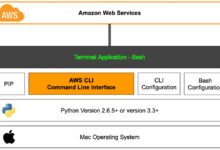
For developers and DevOps engineers, the AWS CLI offers a powerful alternative to the console. However, the CLI doesn’t use passwords. Instead, it relies on access keys (Access Key ID and Secret Access Key) or temporary session tokens.
To configure AWS CLI login:
- Install the AWS CLI from the official AWS site.
- Run
aws configurein your terminal. - Enter your Access Key ID, Secret Access Key, default region, and output format.
After configuration, you can run commands like aws s3 ls or aws ec2 describe-instances without re-entering credentials.
Programmatic Access via SDKs
Applications often need to interact with AWS services programmatically. AWS provides SDKs for languages like Python (boto3), JavaScript (AWS SDK for JS), Java, and .NET. These SDKs use the same credentials as the CLI—stored in environment variables, credential files, or retrieved from IAM roles (in EC2 instances).
Example in Python using boto3:
import boto3

# Create an S3 client
s3 = boto3.client('s3')
response = s3.list_buckets()
print(response['Buckets'])
This code assumes credentials are already configured via aws configure or are available through an IAM role.
Setting Up Your AWS Account for Login
Before you can perform any AWS login, you must have an active AWS account. This involves signing up, verifying your identity, and setting up secure access methods.
Creating an AWS Account
To create an AWS account:
- Go to aws.amazon.com and click “Create an AWS Account.”
- Provide your email, password, and contact information.
- Enter a valid credit card for billing verification (AWS offers a Free Tier with limited services).
- Verify your phone number via automated call or SMS.
- Choose a support plan (Basic is free).
Once completed, you’ll be logged in as the root user—the most powerful account in AWS.
Securing Your Root User
The root user has unrestricted access to all AWS services and billing information. AWS strongly recommends that you do not use the root user for daily tasks. Instead, follow these steps:
- Enable multi-factor authentication (MFA) immediately.
- Create an IAM user with administrative privileges.
- Store root credentials in a secure password manager and use them only when absolutely necessary.
“Never use the root account for routine operations. Always create IAM users.” — AWS Identity and Access Management (IAM) Documentation
Creating IAM Users for AWS Login
IAM users are individual identities with specific permissions. To create one:
- Log in to the AWS Console as the root or an admin user.
- Navigate to the IAM dashboard.
- Click “Users” and then “Create user.”
- Enter a username and select AWS Management Console access or programmatic access.
- Set permissions by adding the user to a group, attaching policies directly, or using a custom policy.
After creation, securely share the login URL, username, and temporary password with the user.
Multi-Factor Authentication (MFA) for Secure AWS Login
MFA is one of the most effective ways to enhance the security of your AWS login. It requires users to provide two or more authentication factors: something they know (password) and something they have (a physical or virtual device).
Why MFA Is Essential
Even strong passwords can be compromised through phishing, keyloggers, or data breaches. MFA adds a second layer of defense. According to Microsoft, MFA blocks over 99.9% of account compromise attacks.
In AWS, MFA is especially critical for:
- Root accounts
- Administrative IAM users
- Users with access to sensitive data or financial controls
Without MFA, a stolen password could give an attacker full access to your cloud environment.
Types of MFA Devices Supported by AWS
AWS supports several MFA types:
- Virtual MFA Devices: Apps like Google Authenticator, Authy, or Microsoft Authenticator generate time-based one-time passwords (TOTP).
- Hardware MFA Devices: Physical tokens like YubiKey or Gemalto that generate codes or support FIDO2/WebAuthn.
- U2F Security Keys: USB or NFC-based keys that provide phishing-resistant authentication.
Virtual MFA is the most common and easiest to set up, while hardware keys offer the highest security.
How to Enable MFA on AWS
To enable MFA for an IAM user:
- Log in to the AWS Console.
- Go to IAM > Users > [Select User] > Security credentials.
- Under “Multi-factor authentication (MFA),” click “Assign MFA.”
- Choose a virtual or hardware MFA device.
- Scan the QR code with your authenticator app or enter the device serial number.
- Enter two consecutive codes from the device to verify.
Once enabled, the user must enter a code from their MFA device every time they log in.
Using IAM Roles for Temporary AWS Login Access
IAM roles are a powerful alternative to long-term credentials. Instead of using permanent access keys, roles provide temporary security credentials that automatically rotate.
What Are IAM Roles?
An IAM role is an identity with specific permissions that can be assumed by AWS services, federated users, or external accounts. Unlike users, roles do not have permanent credentials. Instead, they issue temporary tokens (via AWS STS—Security Token Service) that expire after a set duration (usually 15 minutes to 1 hour).
Roles are ideal for:
- EC2 instances needing access to S3 or DynamoDB
- Cross-account access
- Federated login via SAML or OIDC
How Roles Improve AWS Login Security
Using roles eliminates the need to store long-term access keys on servers or in code. Since temporary credentials expire, the risk of credential leakage is significantly reduced.
For example, instead of embedding access keys in an application running on EC2, you can assign an IAM role to the instance. The application retrieves temporary credentials from the instance metadata service, which are automatically refreshed.
“Roles are the cornerstone of secure, scalable access management in AWS.” — AWS Well-Architected Framework
Assuming a Role via AWS CLI
You can assume a role using the AWS CLI with the sts assume-role command:
aws sts assume-role
    --role-arn arn:aws:iam::123456789012:role/DeveloperRole
    --role-session-name DevSession
This returns temporary credentials (AccessKeyId, SecretAccessKey, SessionToken). You can then export them as environment variables:
export AWS_ACCESS_KEY_ID=...
export AWS_SECRET_ACCESS_KEY=...
export AWS_SESSION_TOKEN=...
Now, all subsequent AWS CLI commands will use the assumed role’s permissions.
Single Sign-On (SSO) and Federated AWS Login
For organizations with multiple AWS accounts and users, managing individual IAM users becomes cumbersome. AWS Single Sign-On (SSO) provides a centralized way to manage access across accounts and applications.
What Is AWS SSO?
AWS SSO is a service that enables users to log in once and access multiple AWS accounts and business applications. It integrates with identity providers like Microsoft Active Directory, Azure AD, Okta, and PingFederate.
With AWS SSO, you can:
- Assign users to permission sets across multiple AWS accounts.
- Enable federated login using SAML 2.0 or OIDC.
- Enforce MFA and conditional access policies.
Users access the AWS SSO user portal and log in with their corporate credentials.
Setting Up Federated Login with SAML
Federated login allows users to authenticate through an external identity provider (IdP). To set this up:
- Enable AWS SSO in your AWS Organization.
- Configure your IdP (e.g., Azure AD) to trust AWS as a service provider.
- Upload the AWS metadata file to your IdP or configure manually using SAML settings.
- Create permission sets in AWS SSO and assign them to users or groups.
Once configured, users can log in to AWS using their corporate credentials without needing an IAM user.
Benefits of SSO for Enterprise AWS Login
SSO simplifies user management, improves security, and enhances compliance. Key benefits include:
- Centralized user lifecycle management (joiner-mover-leaver processes).
- Consistent enforcement of MFA and password policies.
- Reduced administrative overhead in multi-account environments.
- Audit trails for login and access events via AWS CloudTrail.
For large enterprises, AWS SSO is not just convenient—it’s a necessity.
Troubleshooting Common AWS Login Issues
Even with proper setup, users may encounter issues during AWS login. Understanding common problems and their solutions can save time and prevent downtime.
Forgot Password or Locked Account
If an IAM user forgets their password, an administrator can reset it from the IAM console. Root users can reset their password from the AWS sign-in page using the “Forgot your password?” link.
Accounts may be locked after multiple failed login attempts. Wait 15 minutes or contact AWS Support if the issue persists.
Invalid Credentials or Access Denied
This error usually means:
- Incorrect username or password.
- Access keys are disabled or deleted.
- IAM user lacks required permissions.
- MFA is required but not provided.
Solutions:
- Verify credentials and re-enter carefully.
- Check if access keys are active in IAM.
- Ensure the user has the correct IAM policy attached.
- If MFA is enabled, ensure the code is entered correctly.
Region-Specific Login Issues
Some AWS services are not available in all regions. If you’re trying to access a service in a region where it’s not supported, you may see login or access errors.
Always verify that:
- Your AWS CLI or SDK is configured with the correct region.
- The service you’re accessing is available in that region.
- Your IAM policy allows actions in the specified region.
Use the AWS Region Table to check service availability: AWS Regional Services List.
Best Practices for Secure AWS Login Management
Securing your AWS login is an ongoing process. Implementing best practices ensures long-term protection of your cloud environment.
Enforce MFA for All Users
Mandate MFA for all IAM users, especially those with administrative privileges. Use service control policies (SCPs) in AWS Organizations to enforce MFA across multiple accounts.
Use Strong Password Policies
Configure IAM password policies to require:
- Minimum 12 characters.
- Uppercase, lowercase, numbers, and symbols.
- Password rotation every 90 days.
- Prevention of password reuse.
These policies help prevent brute-force and dictionary attacks.
Audit and Monitor Login Activity
Enable AWS CloudTrail to log all AWS login events, including console and API calls. Use Amazon CloudWatch to set up alarms for suspicious activities, such as:
- Logins from unusual locations.
- Multiple failed login attempts.
- Root account usage.
Regularly review CloudTrail logs to detect anomalies.
What is the safest way to perform AWS login?
The safest way to perform AWS login is by using IAM users with multi-factor authentication (MFA) enabled, avoiding the use of root credentials, and leveraging IAM roles for temporary access. For enterprises, AWS Single Sign-On (SSO) with federated identity providers adds an extra layer of security and centralized control.
How do I log in to AWS with the CLI?
To log in to AWS with the CLI, install the AWS CLI and run aws configure. Enter your Access Key ID, Secret Access Key, default region, and output format. Alternatively, use IAM roles on EC2 instances or assume roles via sts assume-role for temporary credentials.
Can I use my corporate credentials to log in to AWS?
Yes, you can use corporate credentials via AWS Single Sign-On (SSO) integrated with identity providers like Azure AD, Okta, or Active Directory. This enables federated login using SAML or OIDC, allowing users to access AWS without separate IAM accounts.
What should I do if I lose my MFA device?
If you lose your MFA device, an administrator can disable MFA for your IAM user and assign a new one. For root users, AWS requires identity verification before MFA can be reset. Always keep backup MFA devices or recovery codes in a secure location.
Why is my AWS login failing even with correct credentials?
Login failures can occur due to disabled access keys, missing permissions, incorrect region settings, or required MFA not being provided. Check IAM settings, ensure credentials are active, and verify that your session token (if using temporary credentials) hasn’t expired.
Mastering AWS login is essential for securely accessing and managing your cloud resources. From console access to CLI configuration, from IAM users to federated SSO, each method plays a role in building a robust and secure cloud environment. By following best practices—enabling MFA, using roles, enforcing strong policies, and monitoring access—you can protect your AWS account from unauthorized access and ensure smooth operations. Whether you’re a solo developer or part of a large enterprise, a secure and efficient AWS login process is the foundation of your cloud journey.
Further Reading: