Logging into the AWS Console doesn’t have to be complicated. Whether you’re a beginner or a seasoned cloud engineer, mastering the AWS Console login process is your first step toward seamless cloud management. Let’s break it down—simply, securely, and smartly.

AWS Console Login: What It Is and Why It Matters

The AWS Management Console is the web-based user interface that allows users to interact with Amazon Web Services. It’s where you launch instances, manage storage, configure security, and monitor performance. But before any of that, you need to perform the aws console login successfully. This step is not just a gateway—it’s the foundation of your entire AWS experience.
Understanding the AWS Management Console
The AWS Management Console is a centralized dashboard that provides access to over 200 AWS services. From EC2 to S3, Lambda to CloudWatch, everything is accessible through a unified interface. The console is designed for ease of use, offering visual tools and wizards to simplify complex cloud operations.
- Available at https://aws.amazon.com/console/
- Accessible from any modern web browser
- Supports multiple languages and regions
Unlike command-line tools or SDKs, the console is ideal for users who prefer a graphical interface. However, it’s crucial to understand that every action taken here stems from a secure aws console login.
The Role of IAM in AWS Console Access
Identity and Access Management (IAM) is the backbone of AWS security. Every aws console login is governed by IAM policies and user permissions. When you log in, AWS checks your credentials against IAM to determine what you can and cannot do.
- Root account has full access but should be used sparingly
- IAM users are recommended for daily operations
- Roles and groups help manage permissions at scale
“The root user is like a master key—powerful, but dangerous if misused.” — AWS Security Best Practices
Step-by-Step Guide to AWS Console Login
Performing an aws console login correctly ensures you start your AWS journey on the right foot. Whether you’re logging in for the first time or managing multiple accounts, this guide covers every scenario.
Logging In as a Root User
When you first create an AWS account, you begin with root user credentials. This account has unrestricted access to all resources and billing information.
- Go to https://aws.amazon.com/console/
- Enter the email address used during registration
- Input your password and click “Sign In”
While convenient, AWS strongly advises against using the root user for daily tasks. Instead, create IAM users with limited permissions.
Logging In as an IAM User
For enhanced security, IAM users are the recommended way to perform aws console login. Here’s how:
- Navigate to your custom sign-in URL:
https://[your-account-id].signin.aws.amazon.com/console - Enter your IAM username and password
- Click “Sign In”
This method ensures that no one is using the root account unnecessarily, reducing the risk of accidental or malicious changes.
Using AWS Single Sign-On (SSO)
For organizations managing multiple AWS accounts, AWS SSO simplifies the aws console login process. It allows users to log in once and access multiple accounts and applications.
- Centralized user management across AWS Organizations
- Integration with existing identity providers like Microsoft Active Directory
- Support for SAML 2.0 and OpenID Connect
AWS SSO enhances both security and usability, especially in enterprise environments.
Common AWS Console Login Issues and How to Fix Them
Even experienced users encounter problems during aws console login. From forgotten passwords to MFA errors, knowing how to troubleshoot is essential.
Forgot Password or Locked Account
If you can’t remember your password, AWS provides a recovery option:
- Click “Forgot Password?” on the login page
- Enter your email or IAM username
- Follow the instructions sent to your registered email
For IAM users, the administrator may need to reset the password. Root users can reset directly via email verification.
MFA Authentication Failures
Multi-Factor Authentication (MFA) adds a critical layer of security. However, issues can arise:
- Time drift in virtual MFA devices
- Lost or damaged hardware tokens
- Incorrect code entry
To resolve time drift, sync your device’s clock or use the AWS CLI to resynchronize. If the MFA device is lost, an administrator must disable MFA and re-enable it with a new device.
Region and URL Configuration Errors
Using the wrong sign-in URL can prevent successful aws console login. Common mistakes include:
- Using the generic AWS login page for IAM users
- Typing the account ID incorrectly in the custom URL
- Not selecting the correct AWS region
Always double-check your sign-in URL format: https://[account-id].signin.aws.amazon.com/console. You can find your account ID in the IAM console or via billing preferences.
Enhancing Security During AWS Console Login
Security should never be an afterthought. Every aws console login is a potential entry point for threats. Implementing best practices minimizes risk.
Enabling Multi-Factor Authentication (MFA)
MFA is one of the most effective ways to secure your AWS account. It requires two forms of identification:
- Something you know (password)
- Something you have (MFA device)
AWS supports virtual MFA apps (like Google Authenticator), U2F security keys, and hardware tokens. Enabling MFA for both root and IAM users is a top recommendation from AWS.
Using Strong Password Policies
Weak passwords are a leading cause of account breaches. AWS allows you to enforce strong password policies via IAM:
- Minimum length of 12 characters
- Requirement for uppercase, lowercase, numbers, and symbols
- Password expiration every 90 days
These policies can be set at the account level, ensuring all IAM users comply.
Monitoring Login Activity with CloudTrail
AWS CloudTrail logs every aws console login attempt, successful or not. This provides an audit trail for security investigations.
- Tracks IP addresses, timestamps, and user agents
- Integrates with Amazon CloudWatch for real-time alerts
- Helps detect unauthorized access attempts
“Visibility is the first step to security.” — AWS CloudTrail Documentation
Best Practices for Managing AWS Console Access
As your AWS environment grows, so does the complexity of managing access. Following best practices ensures scalability and security.
Principle of Least Privilege
Always grant users the minimum permissions they need to perform their tasks. This reduces the attack surface if credentials are compromised.
- Use IAM policies to define granular permissions
- Avoid attaching full administrative policies unless absolutely necessary
- Regularly review and update user permissions
Using IAM Roles Instead of Long-Term Credentials
For applications and services, IAM roles are preferred over static access keys. Roles provide temporary security credentials that rotate automatically.
- Roles can be assumed by EC2 instances, Lambda functions, and federated users
- No need to manage or rotate access keys manually
- Enhances security and compliance
Regular Auditing and Access Reviews
Conduct periodic audits of who has access to your AWS console. Tools like AWS IAM Access Analyzer help identify unintended resource exposures.
- Schedule quarterly access reviews
- Remove inactive users and unused credentials
- Use AWS Trusted Advisor for security checks
Advanced Access Methods: Beyond Basic AWS Console Login
While the standard aws console login works for most users, advanced scenarios require more sophisticated approaches.
Federated Access with SAML 2.0
Enterprises often use existing identity providers (IdPs) like Azure AD or Okta. AWS supports SAML 2.0 for federated access, allowing users to log in using corporate credentials.
- Eliminates the need for separate AWS passwords
- Centralizes user lifecycle management
- Supports single sign-on across multiple cloud platforms
Setting up SAML requires configuring your IdP and creating an IAM identity provider.
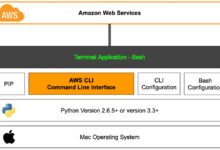
Programmatic Access via AWS CLI and SDKs
For automation and scripting, programmatic access is essential. While not part of the aws console login flow, it’s a critical alternative.
- Use access keys and secret keys for API calls
- Configure AWS CLI with
aws configure - Leverage IAM roles for EC2 instances to avoid hardcoding credentials
Always rotate access keys regularly and never commit them to version control.
Using AWS Organizations for Multi-Account Management
For businesses with multiple AWS accounts, AWS Organizations enables centralized governance. It integrates with AWS SSO for unified aws console login experiences.
- Apply service control policies (SCPs) across accounts
- Automate account creation and setup
- Consolidate billing and reporting
This structure is ideal for large-scale cloud operations.
Tips and Tricks for a Smoother AWS Console Login Experience
Once you’ve mastered the basics, these tips can make your aws console login faster and more efficient.
Bookmark Your Custom Sign-In URL
Skip the confusion of choosing between root and IAM login by bookmarking your custom URL:
- Format:
https://[your-account-id].signin.aws.amazon.com/console - Find your account ID in the IAM console under “Account Settings”
- Share it securely with team members
This small step saves time and reduces login errors.
Use Browser Profiles for Multiple Accounts
If you manage multiple AWS accounts, use separate browser profiles (e.g., Chrome profiles) to stay logged in to each without conflict.
- Create a profile for production, staging, and personal accounts
- Name them clearly (e.g., “AWS – Production”)
- Install AWS-specific extensions in each profile
This prevents accidental actions in the wrong environment.
Leverage AWS CLI for Faster Access
While not a direct replacement for aws console login, the AWS CLI can reduce reliance on the web interface for routine tasks.
- Use
aws sts get-caller-identityto verify your current identity - Automate logins with scripts (for non-sensitive operations)
- Combine with SSO sessions using
aws sso login
Power users often combine CLI and console for maximum efficiency.
Future of AWS Console Login: Trends and Innovations
The way we perform aws console login is evolving. AWS continuously introduces new features to improve security, usability, and integration.
Biometric and Passwordless Authentication
AWS is exploring passwordless login options using biometrics and FIDO2 security keys. This aligns with industry trends toward eliminating passwords altogether.
- Support for WebAuthn in AWS SSO
- Integration with Windows Hello and Apple Touch ID
- Reduced phishing risk
These innovations promise a more secure and user-friendly login experience.
AI-Powered Anomaly Detection
Future AWS security systems may use machine learning to detect unusual login patterns.
- Flag logins from unfamiliar locations or devices
- Automatically trigger MFA challenges
- Integrate with Amazon GuardDuty for threat detection
This proactive approach enhances protection without burdening users.
Unified Identity Across Cloud Providers
As multi-cloud adoption grows, AWS may expand SSO capabilities to integrate with other cloud platforms.
- Cross-cloud identity federation
- Single dashboard for managing access across AWS, Azure, and GCP
- Standardized policies and compliance reporting
This would simplify identity management in hybrid environments.
How do I perform an AWS console login as an IAM user?
To log in as an IAM user, go to your custom sign-in URL (https://[your-account-id].signin.aws.amazon.com/console), enter your IAM username and password, and click “Sign In”. Make sure MFA is enabled for added security.
What should I do if I forget my AWS console login password?
If you’re a root user, click “Forgot Password?” on the login page and follow the email instructions. IAM users must contact their AWS administrator to reset the password.
Why is my AWS console login failing even with correct credentials?
Common causes include using the wrong sign-in URL, MFA issues, account lockout due to failed attempts, or network/firewall restrictions. Verify your URL, check MFA settings, and ensure your device clock is synchronized.
Is it safe to use the root user for AWS console login?
No, AWS recommends using the root user only for initial setup tasks. For daily operations, create IAM users with limited permissions to reduce security risks.
How can I improve the security of my AWS console login?
Enable MFA, enforce strong password policies, use AWS SSO for centralized access, monitor login activity with CloudTrail, and follow the principle of least privilege when assigning permissions.
Mastering the aws console login process is essential for anyone using Amazon Web Services. From understanding IAM roles to troubleshooting common issues and adopting advanced access methods, this guide has covered every aspect to ensure your login experience is secure, efficient, and scalable. As AWS continues to innovate, staying updated on best practices and new features will keep your cloud environment protected and your workflows smooth. Whether you’re a solo developer or part of a large enterprise, the right login strategy forms the foundation of your AWS success.
Recommended for you 👇
Further Reading: