Kickstarting your journey in cloud computing? AWS certifications are your golden ticket. Backed by Amazon’s industry dominance, these credentials validate your skills, boost credibility, and open doors to high-paying tech roles worldwide.
Why AWS Certifications Are a Game-Changer in 2024

AWS (Amazon Web Services) isn’t just a cloud provider—it’s the global leader, powering over 40% of the world’s cloud infrastructure. With such dominance, AWS certifications have become the gold standard in cloud validation. Whether you’re an IT newbie or a seasoned pro, earning an AWS certification signals expertise, commitment, and real-world readiness.
Industry Recognition and Market Dominance
AWS has consistently ranked as the top cloud platform in Gartner’s Magic Quadrant for Cloud Infrastructure. This leadership translates into widespread adoption across enterprises, startups, and government agencies. As a result, AWS certifications are recognized and valued more than any other cloud credential.
- AWS holds a 32% market share in the global cloud infrastructure space (Synergy Research Group, 2023).
- Over 1 million AWS certifications have been awarded globally since the program began.
- Top companies like Netflix, Airbnb, and NASA rely on AWS, increasing demand for certified professionals.
The sheer scale of AWS’s ecosystem means that certified individuals are not just learning a platform—they’re mastering the backbone of modern digital infrastructure.
Higher Salaries and Career Advancement
According to the 2023 Global Knowledge IT Skills and Salary Report, AWS-certified professionals earn, on average, 25% more than their non-certified peers. Cloud architects with AWS certifications can command salaries exceeding $150,000 annually in the U.S.
“Certifications are no longer optional—they’re a career accelerator. AWS certs, in particular, are the most requested by hiring managers.” — Josh Atwell, Cloud Practice Lead at Insight Global
Roles like AWS Solutions Architect, DevOps Engineer, and Cloud Security Specialist are consistently listed among LinkedIn’s top 10 emerging jobs. Certification often serves as a prerequisite for these positions.
Understanding the AWS Certification Hierarchy
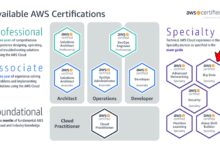
AWS offers a structured, role-based certification path designed to align with real-world job functions. This hierarchy ensures that learners progress logically from foundational knowledge to specialized expertise. The certifications are divided into four levels: Foundational, Associate, Professional, and Specialty.
Foundational Level: AWS Certified Cloud Practitioner
This entry-level certification is perfect for non-technical roles or those new to cloud computing. It validates a general understanding of AWS Cloud, including core services, billing, security, and compliance.
- Target audience: Sales, finance, management, and IT pros transitioning to cloud.
- No prerequisites, but 6+ months of AWS experience is recommended.
- Exam cost: $100 USD.
The Cloud Practitioner exam (CLF-C02) is a great starting point to build confidence and lay the groundwork for more advanced AWS certifications.
Associate Level: The Core Technical Tier
Associate-level certifications are where technical depth begins. These are ideal for individuals with hands-on experience in designing, deploying, and managing AWS solutions.
aws certifications – Aws certifications menjadi aspek penting yang dibahas di sini.
- AWS Certified Solutions Architect – Associate (SAA-C03)
- AWS Certified Developer – Associate (DVA-C02)
- AWS Certified SysOps Administrator – Associate (SOA-C02)
Each of these tracks focuses on a specific role, requiring a solid grasp of AWS services, best practices, and architectural principles. Most candidates spend 3–6 months preparing with labs, courses, and real-world practice.
Professional Level: For Cloud Experts
The Professional tier is designed for experienced cloud architects and engineers who design complex, scalable systems. These exams are notoriously challenging and require deep, hands-on expertise.
- AWS Certified Solutions Architect – Professional (SAP-C02)
- AWS Certified DevOps Engineer – Professional (DOP-C02)
These certifications often serve as a benchmark for senior technical roles and leadership positions. Passing one of these exams demonstrates mastery and strategic thinking in cloud architecture.
Specialty Certifications: Deep Dives into Niche Areas
AWS offers several Specialty certifications for professionals who want to focus on specific domains like security, machine learning, and databases.
- AWS Certified Security – Specialty (SCS-C02)
- AWS Certified Machine Learning – Specialty (MLS-C01)
- AWS Certified Database – Specialty (DBS-C01)
- AWS Certified Advanced Networking – Specialty (ANS-C01)
- AWS Certified Data Analytics – Specialty (DAS-C01)
These exams are ideal for professionals looking to stand out in competitive fields. For example, the Security – Specialty certification is highly sought after in industries like finance and healthcare, where compliance is critical.
Top 7 AWS Certifications You Should Consider in 2024
With so many options, it’s essential to choose the right AWS certifications based on your career goals. Here are the seven most valuable and in-demand certifications this year.
1. AWS Certified Cloud Practitioner
This is the gateway certification. It’s perfect for anyone starting their cloud journey, including project managers, business analysts, and non-technical stakeholders.
- Covers core AWS services, pricing models, and security concepts.
- Helps non-technical teams communicate effectively with cloud engineers.
- Often required for internal AWS training programs in large organizations.
While it doesn’t require coding or deep technical knowledge, it builds a solid foundation for future learning. You can prepare using AWS’s free digital training or platforms like AWS Training and Certification.
2. AWS Certified Solutions Architect – Associate
Consistently ranked as the most popular AWS certification, this is the go-to credential for aspiring cloud architects.
- Focuses on designing distributed systems, cost optimization, and high availability.
- Requires understanding of EC2, S3, VPC, RDS, and CloudFormation.
- Highly valued by employers—often listed as a requirement in job postings.
According to Coursera and other learning platforms, this certification has one of the highest ROI rates among IT credentials.
aws certifications – Aws certifications menjadi aspek penting yang dibahas di sini.
3. AWS Certified Developer – Associate
Tailored for software developers who build applications on AWS, this certification validates skills in AWS SDKs, APIs, and serverless technologies like Lambda.
- Covers CI/CD pipelines, debugging, and deployment strategies.
- Requires knowledge of IAM policies, DynamoDB, and CloudWatch.
- Ideal for full-stack developers moving into cloud-native development.
This cert bridges the gap between traditional development and cloud engineering, making it a powerful addition to a developer’s resume.
4. AWS Certified SysOps Administrator – Associate
For IT operations professionals, this certification focuses on deployment, management, and operations of AWS environments.
- Emphasizes monitoring, logging, automation, and troubleshooting.
- Key services include CloudWatch, Systems Manager, and AWS CLI.
- Perfect for system administrators transitioning to cloud operations.
Many DevOps teams require at least one SysOps-certified member to ensure operational excellence and system reliability.
5. AWS Certified Solutions Architect – Professional
This is where elite cloud architects are made. The Professional-level exam tests advanced architectural design, migration strategies, and cost control at scale.
- Requires 2+ years of hands-on AWS experience.
- Covers multi-account strategies, hybrid architectures, and disaster recovery.
- Passing this exam often leads to promotions or six-figure salary offers.
It’s not just about knowing services—it’s about making strategic decisions under complex constraints. Many professionals spend 6–12 months preparing for this exam.
6. AWS Certified DevOps Engineer – Professional
For those focused on automation, CI/CD, and infrastructure as code (IaC), this certification is a career accelerator.
- Validates expertise in tools like CodePipeline, CodeBuild, CloudFormation, and Terraform.
- Focuses on building scalable, self-healing systems.
- Highly relevant in agile and cloud-native organizations.
According to LinkedIn Jobs, DevOps roles with AWS expertise have grown by 45% year-over-year.
7. AWS Certified Security – Specialty
As cyber threats grow, so does the demand for cloud security experts. This certification is designed for professionals who implement and manage security controls in AWS.
- Covers encryption, threat detection, IAM, and compliance frameworks (GDPR, HIPAA).
- Requires deep knowledge of AWS Shield, WAF, GuardDuty, and KMS.
- Often required for roles like Cloud Security Engineer or Chief Information Security Officer (CISO).
With data breaches costing companies millions, this certification is not just valuable—it’s essential.
aws certifications – Aws certifications menjadi aspek penting yang dibahas di sini.
How to Prepare for AWS Certifications: A Step-by-Step Guide
Earning an AWS certification isn’t just about memorizing facts—it’s about understanding concepts, applying best practices, and gaining hands-on experience. Here’s a proven roadmap to help you succeed.
Step 1: Choose the Right Certification
Start by aligning your certification goal with your career path. Ask yourself:
- Am I in a technical or non-technical role?
- Do I want to design systems, write code, or manage operations?
- What jobs am I targeting?
For example, if you’re a developer, the Developer – Associate track makes sense. If you’re aiming for leadership, start with Cloud Practitioner and move to Solutions Architect – Professional.
Step 2: Leverage Official AWS Training
AWS provides free and paid training resources through AWS Training and Certification. These include:
- Free digital courses (e.g., AWS Cloud Practitioner Essentials)
- Instructor-led classes (virtual or in-person)
- Exam readiness guides and practice tests
These materials are aligned with exam content and are updated regularly to reflect changes in AWS services.
Step 3: Use Hands-On Labs and Sandboxes
Nothing beats real-world practice. AWS offers the AWS Hands-On Labs and free tier accounts, allowing you to experiment without cost.
- Build a VPC with public and private subnets.
- Deploy a serverless application using Lambda and API Gateway.
- Set up automated backups and monitoring with CloudWatch.
Platforms like A Cloud Guru, Udemy, and Coursera also offer sandbox environments for practice.
Step 4: Take Practice Exams
Practice exams help you identify knowledge gaps and get comfortable with the question format. AWS offers official practice tests for $20–$30.
- Focus on scenario-based questions—they make up 70% of the exam.
- Review explanations for both correct and incorrect answers.
- Aim for 80%+ on practice tests before scheduling the real exam.
Third-party providers like Tutorials Dojo and Whizlabs are also highly rated for their realistic exam simulations.
Step 5: Schedule and Take the Exam
Exams are delivered through Pearson VUE and can be taken online or at a test center. Be sure to:
aws certifications – Aws certifications menjadi aspek penting yang dibahas di sini.
- Review AWS’s exam policies and ID requirements.
- Test your internet connection and environment if taking it remotely.
- Arrive early and stay calm during the exam.
Most exams are 80–130 minutes long with 65–75 questions. You’ll receive a pass/fail result immediately.
Benefits of AWS Certifications Beyond the Resume
While salary and job opportunities are major draws, AWS certifications offer deeper, long-term benefits that shape your professional identity.
Building Confidence and Technical Fluency
Studying for an AWS certification forces you to dive deep into services you might otherwise overlook. This deep dive builds confidence in your ability to solve real problems.
- You’ll learn how services interact—like how IAM policies affect S3 access.
- You’ll understand trade-offs between different architectures (e.g., serverless vs. EC2).
- You’ll gain the vocabulary to discuss cloud strategies with stakeholders.
This fluency is invaluable when leading projects or mentoring junior team members.
Access to AWS Partner Network and Communities
Certified professionals gain access to exclusive resources, including:
- AWS Partner Network (APN) benefits for consultants and solution providers.
- Invitations to AWS summits, webinars, and certification holder events.
- Badges and digital credentials to showcase on LinkedIn and resumes.
The AWS community is vast and supportive. Platforms like Reddit’s r/AWSCertifications and the AWS Developer Forums are great places to connect with peers.
Staying Current in a Fast-Evolving Field
AWS releases hundreds of new features and services each year. Certification preparation keeps you updated on the latest innovations.
- For example, AWS re:Invent 2023 introduced new AI/ML services that are now part of the Machine Learning – Specialty exam.
- Recertification (required every 3 years) ensures you don’t fall behind.
- Continuous learning becomes a habit, not a chore.
This adaptability is what sets certified professionals apart in the tech world.
Common Challenges and How to Overcome Them
While AWS certifications are rewarding, they come with challenges. Here’s how to tackle the most common ones.
Challenge 1: Information Overload
AWS has over 200 services. Trying to learn them all is overwhelming. The key is to focus on the services covered in the exam guide.
aws certifications – Aws certifications menjadi aspek penting yang dibahas di sini.
- Download the official exam guide from AWS.
- Use mind maps or flashcards to organize service categories (compute, storage, networking, etc.).
- Learn by doing—build small projects that use key services.
Remember: You don’t need to know every service—just the core ones and how they work together.
Challenge 2: Hands-On Experience Gaps
Many candidates struggle because they lack real AWS experience. The solution? Use the AWS Free Tier.
- Sign up for a free account and get 12 months of free access to popular services.
- Follow guided projects from GitHub or AWS Workshops.
- Join hackathons or open-source projects that use AWS.
Even 10–15 hours of hands-on practice can dramatically improve your understanding.
Challenge 3: Exam Anxiety
The time pressure and scenario-based questions can be stressful. Combat this with simulation.
- Take full-length practice exams under timed conditions.
- Practice typing commands and drawing architectures on paper.
- Use the process of elimination for tricky multiple-choice questions.
Remind yourself: The exam tests decision-making, not memorization. Focus on the “most secure,” “most cost-effective,” or “best performing” solution.
Future-Proofing Your Career with AWS Certifications
The cloud isn’t a trend—it’s the foundation of modern technology. As more businesses migrate to AWS, the demand for certified professionals will only grow.
The Rise of AI and Machine Learning on AWS
AWS is investing heavily in AI/ML services like SageMaker, Bedrock, and Rekognition. The AWS Certified Machine Learning – Specialty certification is becoming increasingly relevant.
- Professionals with ML + cloud skills are in high demand.
- Industries like healthcare, finance, and retail are adopting AI at scale.
- Combining ML certification with Solutions Architect knowledge creates a powerful skill set.
Future certifications may include more AI-focused roles, making early specialization a smart move.
Hybrid and Multi-Cloud Expertise
While AWS dominates, many organizations use hybrid (on-prem + cloud) or multi-cloud (AWS + Azure/GCP) setups. AWS certifications now include content on Outposts, Direct Connect, and hybrid identity.
- Understanding how AWS integrates with other systems is a growing need.
- Specialty certs like Advanced Networking – Specialty address this directly.
- Future exams may emphasize cross-platform interoperability.
Being certified in AWS while understanding broader cloud ecosystems makes you a more versatile professional.
aws certifications – Aws certifications menjadi aspek penting yang dibahas di sini.
Lifelong Learning and Recertification
AWS requires recertification every three years. While some see this as a burden, it’s actually a benefit.
- It ensures your knowledge stays current.
- It encourages continuous professional development.
- It signals to employers that you’re committed to excellence.
Think of recertification not as a test, but as a milestone in your ongoing learning journey.
What is the easiest AWS certification to start with?
The AWS Certified Cloud Practitioner is the easiest and most recommended starting point. It requires no technical background and covers fundamental cloud concepts, making it ideal for beginners.
How long does it take to get AWS certified?
It depends on your experience. Beginners may need 4–6 weeks for Cloud Practitioner, while Associate-level certs can take 3–6 months with consistent study and hands-on practice.
Are AWS certifications worth it in 2024?
Absolutely. AWS certifications are highly valued by employers, lead to higher salaries, and open doors to in-demand cloud roles. With AWS’s market leadership, these credentials remain a smart career investment.
Can I get AWS certified without experience?
Yes, especially for the Cloud Practitioner exam. However, Associate and Professional levels require hands-on experience. Use the AWS Free Tier to gain practical skills before attempting these exams.
aws certifications – Aws certifications menjadi aspek penting yang dibahas di sini.
How much do AWS certification exams cost?
Foundational exams cost $100, Associate exams are $150, Professional exams are $300, and Specialty exams are $300. Practice exams cost $20–$40.
Investing in AWS certifications is one of the most strategic moves you can make in your tech career. From foundational knowledge to advanced specialties, these credentials validate your expertise, boost your earning potential, and keep you ahead in a rapidly evolving industry. Whether you’re just starting out or aiming for a leadership role, there’s an AWS certification path designed for you. The cloud future is here—certify your place in it.
Further Reading:
